Tuesday, May 5, 2026

Earl Bryant

February 14, 1916 – July 30, 1977

Earl Bryant was born on February 14, 1916, in Jasper County, Texas, to Mose Bryant, age 27, and Ruth Bryant, age 24. By the time of the 1920 U.S. Census, three-year-old Earl was living with his mother and his maternal grandparents, Royal and Loussinda Seal, on Bevilport Road in Jasper County.


In 1930, Earl continued to live with his mother, along with his siblings—Marie, Jack, and Wesley. The family worked as farmers, and Earl had completed only a sixth-grade education and was no longer attending school.


Around 1933, Earl became the father of a daughter, Irene Bryant, with Ora Dee Hadnot. He later married Ethel Lee Beatty, and by 1940, the couple was renting a home on Highway 63 in Jasper County, valued at $100. That year, Earl reported earning $200. The household included their young son, Talmadge Bryant.


On October 6, 1940, Earl registered for the U.S. military draft. His registration described him as 5 feet 8 inches tall, weighing 156 pounds, with a dark complexion, brown eyes, and black hair. His wife, Ethel Lee Bryant, was listed as his next of kin. He later enlisted in the U.S. Army in April 1944 and was honorably discharged in June of the same year.


By 1949, Earl and Ethel Lee had relocated to Galveston, Texas, where they lived at 2515 Avenue G. Earl worked as a longshoreman, a physically demanding job tied to the busy port life of the Gulf Coast.


On July 11, 1952, the couple welcomed a son, Edward Russell Bryant. Tragically, Edward passed away in September of that same year due to congenital heart disease.


Earl Bryant died on July 30, 1977, at the age of 62. He was laid to rest on August 4, 1977, at Lakeview Cemetery in Galveston.


Lucky Limbrick 

March 18, 1910 – May 18, 1957 

Lucky Limbrick was born on March 18, 1910, in Jasper County, Texas, into a large East Texas family. His parents, Doucette Limbrick and Maggie Frazier, raised him among many siblings in a world shaped by hard work, close family ties, and the realities of the early twentieth-century South. From the beginning, Lucky’s life carried both connection and restlessness—a sense that he was never meant to stay in one place for long.


As a young man, Lucky became a father early. In 1927, he and Sarah Byerly welcomed a daughter, Granda Lee Limbrick. Three years later, in 1930, he had a son, Willie Luckie Limbrick, with Helen Armstron. Lucky and Helen married just a week after Willie was born, but theirs was not a lasting partnership. Though married in name, they never truly built a life together under one roof.


In 1931, after the death of his mother, Maggie, Lucky left Jasper County for Houston, joining many others in search of work and a fresh start during difficult times. By 1932, he was living with relatives at 2811 Anita Avenue and working as a porter at Hirsch Brothers department store. Houston offered opportunity, but Lucky’s path there was uneven. In 1934, he lost his job after being accused of stealing chewing gum—a small incident that hinted at larger struggles that would follow him.


His personal life shifted just as quickly. He divorced Helen in March 1937, and less than two months later, he married Elnora Elliott. For a time, he tried again to build stability. During World War II, in 1943, he registered for the draft. The card described him in simple terms: a Negro man, six feet two inches tall, 178 pounds, light brown complexion. At the time, he was working at Earl North Buick Company on Milan Street in Houston. Even in the plain language of official records, a picture emerges—of a tall man trying to steady his life through work.


But stability remained elusive. That same year, he was arrested again for theft. In 1947, Elnora filed for divorce. Sometime in the late 1940s, Lucky left Texas and moved west to California, perhaps searching once more for a place where life might come together.


By the 1950 census, he was living in Los Angeles with two of his sisters, Earnestine Wilson and Dorothy Jean Roberts. After years of movement and hardship, he found himself again among family—the people who had known him from the beginning. It is a quiet but meaningful detail: no matter how far he traveled, family remained part of his story.


Lucky Limbrick died in March 1957 at the age of 47. The cause was listed as cirrhosis of the liver. The informant was his sister, Blanche Limbrick Gray—another reminder that family was present at the end, just as they had been at the start. He was laid to rest in Evergreen Cemetery in Los Angeles.


Lucky Limbrick’s life was not easy, nor was it simple. He made mistakes, faced loss, and carried burdens that can only partly be understood through records and memory. But he was more than his hardships. He was a son, a brother, and a father—part of the story that led to me. His life—imperfect, complicated, and deeply human—is part of the inheritance he left behind.


 Helen Armstrong Jordan

September 27, 1912 – May 20, 2010

Helen Armstrong Jordan, born September 27, 1912, in the Peachtree community of Jasper County, Texas, was the youngest of eight children born to Joe Fent and R. V. Armstrong. She spent her early years rooted in family, faith, and the close-knit community that would shape her lifelong devotion to service and hard work.

Helen became the proud mother of one son, Willie Luckie Limbrick, born February 21, 1930. One week after his birth, she married his father, Luckie Limbrick, though they never lived together. In 1937, Luckie filed for divorce in Houston, Texas. Two years later, Helen found lasting companionship when she married Alonzo Jordan in 1939, beginning a partnership marked by mutual support and shared purpose.

Throughout her life, Helen worked tirelessly to provide for her family. She was employed as a maid and childcare provider for Dr. Hugh Hardy and his daughter, Mary Ada. Dedicated and resilient, she often walked six or seven miles to work, occasionally catching rides on wagons heading into town. When long hours required it, she rested on a cot in the Hardy family’s dining room, demonstrating her unwavering commitment.

In the mid-1950s, Helen began working at a local flower shop, where her natural creativity and strong work ethic allowed her to flourish. Over time, she became a highly respected wedding planner and decorator within the African American community in Jasper. Her talent and attention to detail made her the trusted choice for countless families during their most cherished celebrations.

At home, Helen’s hands were rarely still. She lovingly sewed dresses and baby clothes for her growing family, which expanded steadily with the arrival of grandchildren nearly every two years. Alongside her husband Alonzo, she also contributed to his photography business. Together, they formed a remarkable team—Helen decorating weddings while Alonzo captured the memories through his lens.

A woman of deep faith, Helen was a founding member of Mt. Olive Baptist Church in Jasper. She remained a devoted member throughout her life, serving as a Sunday school teacher and president of the women’s mission. Each Sunday, her voice could be heard joyfully proclaiming Psalm 100: “Make a joyful noise to the LORD, all the earth!”

Helen Armstrong Jordan passed away on May 20, 2010, at the age of 97. She leaves behind a legacy of strength, creativity, faith, and unwavering dedication to family and community. Her life stands as a testament to perseverance, love, and service, and her memory continues to inspire all who knew her.

Sunday, May 11, 2025

 Sometimes their picture speaks louder than their words. 


“I am not an educator, but an awakener”Robert Frost

During the Jim Crow period, educational opportunities for Blacks in the South were minimal at best and non existent for most. Black schooling faced limited funding, inadequate resources, and systematic racism. There were communities, however, who created ways to educate themselves and their children. There were also educators who went above and beyond to not only teach but also to encourage and motivate their students. Here are a few examples of those educators: 

James Colon “J. C.” Frazier 
1872-1960

Hardin County, Texas’ only Rosenwald school was built between 1921 and 1922 in Silsbee, Texas. James Colon "J. C." Frazier was hired to serve as principal of the new school. Before the Rosenwald school was built, Black students were taught at Silsbee’s First Missionary Baptist Church by Professors Waldo Mathews. Frazier and Mathew’s’ worked together to educate African American students in Hardin County. A high school was built in the 1930s and named after Waldo Matthews. Professor Frazier was principal until his death in 1960. 


Viola Southwell Tukes at Rock Hill School with her husband, Ambros Tukes

Viola Southwell Tukes, educated at Prarie View A&M, taught elementary school at Rock Hill Elementary School, a Rosenwald school  located in Jasper County, Texas. In 1955 Jasper Independent School District consolidated all "Colored" schools east of Highway 63 with J. H. Rowe schools. Viola continued her teaching career at J. H. Rowe Elementary. Viola Southwell Tukes often encouraged her students by telling them, "Every one of you is going to college." Many of them did. 


Built between 1920 and 1921, the Rock Hill school building is one of the few Rosenwald schools still in existence. It is owned and maintained by Rock Hill Baptist Church and is used by the church as a dining hall


Frank Bryant, Sr. 
1894-1943

Frank Bryant was a veteran of World War I. After the war he became a teacher and later a principal at a Rosenwald school in Sabine County, Texas. 


Isaac Janes “Ike” Gilder became principal of Colmensneil  Colored School in Colmensneil, Texas in 1909. It started in a small log structure shared with a church. Later the school grew to a furnished three room building. Gilder then led the construction of two additional classrooms and indoor restrooms. For his efforts the school was named Gilder High School in his honor. James Isaac Gilder retired in 1949. His daughter, Helen Ellamae Gilder (1915-2000), continued the family teaching legacy. She taught in the Colmensneil school district until her retirement and later was a member of the Retired Teachers Association of Tyler County.


 What’s In A Name?

African American genealogy is a challenge. One of the many brick walls I’ve faced is surnames. Most enslaved individuals were denied an official surname prior to emancipation. To make matters worse, there was not a particular method of choosing a surname once they were freed. Sometimes surnames of former slave holders were chosen. In other cases surnames were assigned to them by government agencies. Members of the same family were often enslaved by different owners and labeled with that enslaver’s surnames. If the husband and wife had been on different plantations, the husband would sometimes assume the last name of his wife. These names were often changed in later years.  

One example of this in my family is the Ferrell/Brumley names. My 2x-great grandmother, her mother, and siblings were owned by James  “Ansel” Ferrell. The family was listed as Ferrells in the 1870 census. My 2x great grandmother kept the name until her marriage to in 1877.  Her mother also kept the Ferrell name until she married in 1876. By 1880, my 2x-great grandmother’s siblings had changed their surname to Bromery or Brumley.  


Another reason for surname confusion is the dialect of the time. The newly emancipated had no education so pronunciation of their last names was difficult and spelling was impossible. The name Limbrick was pronounced and spelled in several different ways: Limbrie, Limerick, Lembrick, Limrick (to name a few). 


My paternal 3x-great grandmother might be my biggest surname challenge. Her first name was Cintha, or Sintha, or Cynthia. Her maiden name was sometimes recorded as “Heirlough” and at other times as “Furlough”. Could it have been a mispronunciation or misspelling of the name “Furlow”? I have found some DNA connections to the Furlow family who orginated in Georgia and Mississippi and later settled in Louisiana. 

Sunday, February 16, 2025


Call The Midwife 

 African American midwives have always played an important role in Black communities. Up until the middle of the twentieth century almost all African American babies were delivered by midwives. In my own family, two sisters, one brother, and I were delivered at home. Delivering babies  was what they are remembered most for, but sometimes midwives, also called “grannies”, were the equivalent of today’s nurse practitioners. Their knowledge of medicinal plants, traditional remedies, and attention to sanitation helped people with medical issues other than pregnancies. Women with gynecological issues were often in need of counseling and treatment  


My own 3x great-grandmother, Marinda Hadnot, was one of those whose hands caught many babies and helped heal the sick and injured. Marinda (affectionately called “Mama Rindy”or “Rena”) was born in Sabine County, Texas in 1853. Her mother, Malinda Hadnot, might also have been a midwife. It seems most of Marinda’s deliveries were in Peach Tree and Bevilport communities of Jasper County, Texas.  

A few of the babies delivered by Mama Rindy:


Drew Ella Armstrong Harris (1905-1981); born in Bevilport; 

daughter of Wash and Lula Armstrong 


Eareen Armstrong; born in Peach Tree; daughter of Joe and R. V. Armstrong 


Alton Adams (1905-1980); born in Peach Tree; son of John and Nancy Adams 


Marinda even helped deliver her own daughter, Alice Armstrong in 1905 in Peach Tree. 


Most midwives served the community in which they lived. Here are some of the other midwives serving Jasper County in the early 1900s:

Ellen Renfro - Bevilport 

Emma Fisher - Jasper 

Viney Trotti - Jasper

Matilda Lockett- Kirbyville and Magnolia Springs 


Marinda would give birth to another daughter, Mary Seale, the mother of Albert Hadnot my great grandfather. Marinda lived to be 87 years old. She died in 1940 and is buried in Hadnot Cemetery, Jasper County, Texas. 


Monday, January 27, 2025

War Games

When we were children, my siblings and I played “war” behind our great-grandparents home in Jasper County, Texas. We would throw dirts bombs, aim sticks as rifles, and the washed out ditches were the trenches where we sheltered from our enemies. We never thought that real troops might have marched over our playground. 

In his own words, Will Shelby (1850-1940), tell of his experiences during slavery, what he witnessed after the Civil War, and his life following the war. His narrative is a snapshot of the lives of my ancestors in the community where I was raised. 

What a history lesson about where we lived!

Texas Slave Narrative

 Will Shelby 

Will Shelby , of Peach Tree, is a slender negro about five feet and eight inches in height. He has thin features, bronze complexion, short whiskers, and a pleasant countenance. He rides horseback seven miles to town, which is proof of his activity for his eighty-six years. He seems to have character, and to have led a good, worth-while life.

My name's Will Shelby . I libs in the Peach Tree section, seben mile' nor'-wes' of Jasper. I was bo'n in Jasper eighty-six year' 'go las' October. My fadder's name was Peter Shelby , and he come from Arkansas. My mudder' name, Phillis Shelby and she part Injun. Us marster, Alfred Shelby , he hab big plantation at Peach Tree. He kep' only 'bout six or seben slaves, and was 'bout 's good to us 's mos' marsters. Marster funrnish' us wid shoes in the winter, but he fam'ly didn' b'long to no chu'ch and didn' read the Bible to us, or he'p us la'rn to read and write. Our mistess name was Lindy Shelby . Dey hab fo' or five chillen. Dey ol'es' son went to the war and git sho froo (through) de jaw, and git sont home. Atter so long a time, he git well. Bout the close of the war, t'ousands of sojers pass' the place goin' back Norf. Dey was t'ree or mo' day' passin' and us couldn' git no milk durin' dat time. Eb'ry time us go to milk, dey'd tek the milk and drink it befo' us could git to the house wid it. My gran'paren's come from Memphis, Tennessee. Dey was slaves all dey life'. My brudders name' was Clark , John , Henry and Ambrose . My sister' name' was Sally , Jane , Pet and Daffy . Us marster whip' us a-plenty. Iffen one run 'way, he sot the dogs on 'im, den dey brung 'im back and beat 'im up. I see us neighbors runnin' dey slaves wid dogs, and whippin' 'em 'til dey was plum' bloody. We uster git a pass and go to chu'ch at Peach Tree w'en we's slaves. Rev. Neeley , a Mef'dis' was my fav'rit preacher. He was de fust preacher w'at open up the cullud chu'ch dere of 'bout a hunnerd members. W'en us was freed, us move on Mistah Pickle's fa'm, and I's jes' fa'm mos' all my life. W'en I's 'bout nineteen, I marry Gracie Hadnot . I wo' a black suit and she wo' w'ite dress. Rev. Gilbert , another Mef'dis' preacher, marry us. Us hab 'leben chillen, but mos' of dem dead no'. My wife die' twenty-five year' 'go. I libs all by myse'f 'cept for my blin' daughter, w'at was bo'n blin', and she now sixty-five year' ol'. I gits 'leben dollars pension. Dey give her pension at fust, den dey stop' it. Don' know w'at for dey stop' it. She stay all by herse'f w'en I's gone. In winter, she allus stay in bed 'til I gits back, 'cause she skeert she bu'n the house, or bu'n up herse'f. I owns twenty-five acre farm, but I's got po' house, w'at I hopes to 'pair dis nix' fall. I rents my lan' out w'en I kin. W'en we fust uster come to Jasper, dar was only two sto's in the town. Ol' doctor W'ite he kep' a hotel close to w'er the Cit'zens Bank am now. W'en the war start' us didn' hab a mill or shingle in Jasper. Dey spin and weave all dey clo's. In the early day, us allus walk' de seben mile' to town. Us hab ox teams but us rather walk dan drive dem. Jes' atter freedom come, the sojers come and ax marster if he hab tu'n' he slaves loose. He tell dem dat he hab. 'Well'dey say, dey is jes' 's free 's you is now, and kin go and wuk w'er dey please. We sho' got 'nuf whippin' in dem days. Marster whip' the ol' folks, and mudder whip' us youngsters. Us uster hunt and fish w'en us hab time, and git fish, rabbits, 'possum, 'coon, squirrel, wild tukkey, deer, and I track' and see one or two bear, but never git 'em. I never see a ghos' or w'at look like one in all my life. Some of us neighbors' slaves run 'way and go down in ol' man Smith ' fiel' and mek a camp in a under-groun' tunnel. Dey hab cans, skillets, and all sich to cook wid. Me and another fin' dere camp w'ile us was fishin' one day, but co'se, us wouldn' tell on 'em. I's jes' stay 'roun' Jasper and fa'm all the time. I ain't been fifty mile' from home in all my life.


Eular Armstrong Jones


Eular Armstrongs 
1913-1990

When Eular Armstrong was born on September 15, 1913, in Nevada County, Arkansas her mother, Hattie Armstrong, was 21 years old. GEular married Henry B. Jones on September 4, 1943, in Nevada, Arkansas. They had five children (four sons and one daughter) during their marriage. She died on October 27, 1990 in Rosston, Arkansas at the age of 77, and was buried in Nevada County, Arkansas.


Eular is a descendant of the Ely Armstrong branch of our family tree. Ely was one of the five siblings born during the 1820s to Dennis Armstrong (born 1790), an enslaved man owned by John Everett Armstrong’s family in Wilcox County, Alabama. 


Linda Sue Jones Peevy


Friday, January 17, 2025

Ella Mae’s Sad Beginning

Ella Mae Cauley (4th cousin) was born March 16, 1932. When she was born, her mother, Gladys Land (3rd cousin 1x removed), was 20 years old. Her father, Rube Cauley, was 23 years old. Ella Mae was their first born. 

In April 1934 Gladys gave birth to a baby boy. Sadly, however, the baby passed away from asphyxia within 24 hours of his birth. This might have been the first tragic event in two year old Emma’s life, but it wouldn’t be the last. Less than 18 months later Ella’s mother, Gladys, would be murdered in their South Quarters home. The killer? Rube. 

Rube Cauley killed his wife inside their home with an axe. Maybe it was the realization and guilt of what he had done, but soon after Gladys was killed Rube drank lye and he too was dead. 

Three year old Ella Mae was left without either parent. She was taken in and raised by her grandparents, Glibert Land, Jr. (1st cousin 3x removed) and Adrilla Traylor Land (2nd cousin 2x removed). As a young adult, Ella Mae moved to Detroit, Michigan where she lived near members of the Land family. She soon married a man named Womack. Until her death in 2020, Ella lived in and around the Detroit area. Ella Mae Cauley Womack was 88 years old.


 Charles Bennie “C. B.” Redd

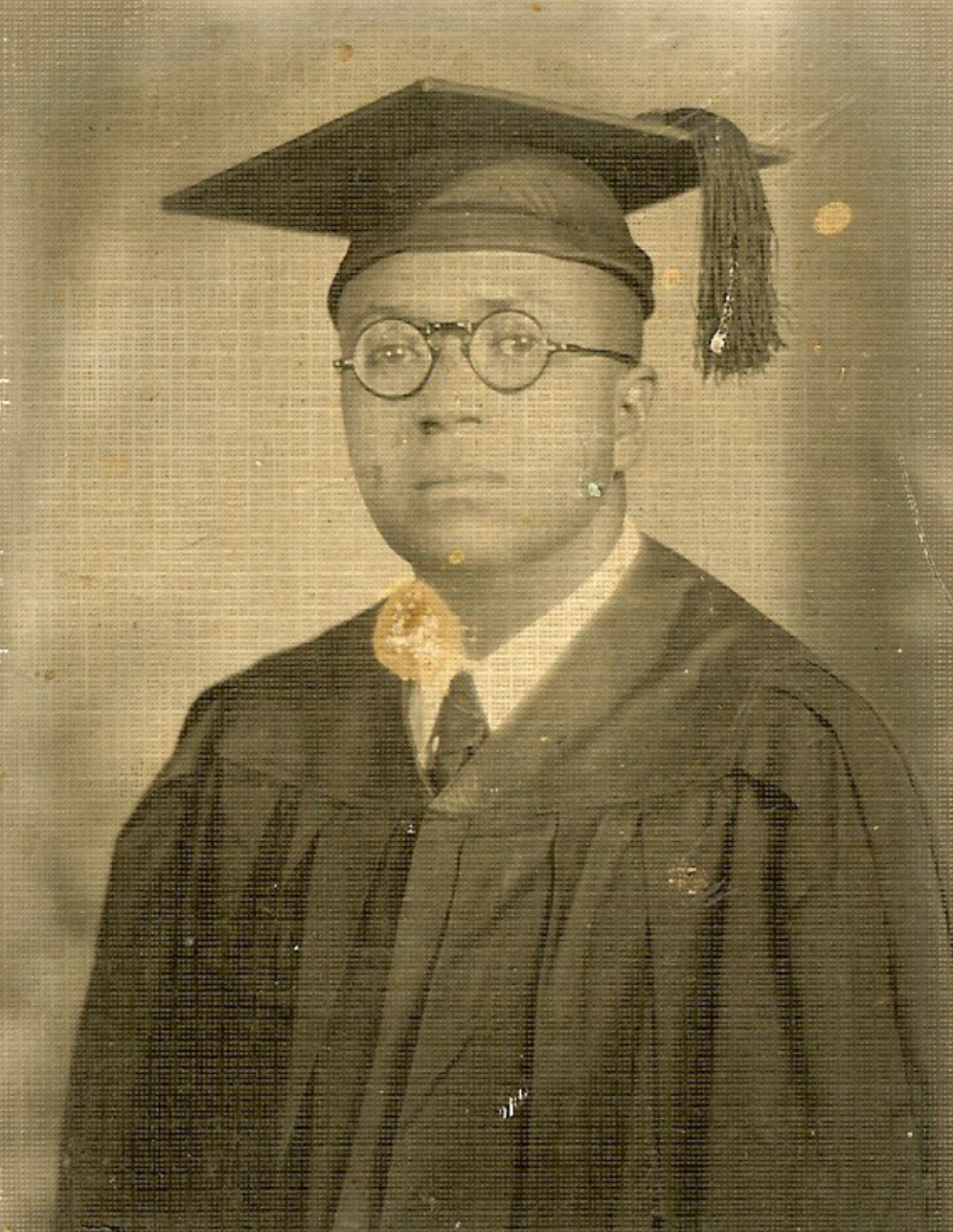
Charles Bennie “C. B.” Redd (1913-1982) was born in the Roganville community in Jasper County, Texas. His father, Charles Redd, Sr., was the son Charlotte Bryant. His mother, Bettie Bryant, was a from the same Bryant family.

Charles Redd was an educator, but education was not just a career for C. B., it was a way of life. He received his bachelor’s degree from Huston Tilotson College and a master’s degree from Texas Southern University. He also studied at New York University and North Texas State University. He was affectionately known as “Professor Redd”. 

During his 44 years as an educator, Professor Redd taught at Bishop and Butler Colleges. Most of his career as an educator, however, was served in Texas public schools including schools in Texas City, Lamar, and Longview. Denton ISD was where he spent the last 29 years as a school administrator. While in Longview Professor Redd was the principal at Fredonia Colored School, a Rosenwald school located in the Fredonia freedom colony near Kilgore, Texas. Longview is where he met and married his wife, Estella Timms (also a teacher in Kilgore and Denton), and where their son, Charles Redd, Jr. was born. 

C. B. Was a member of many social and civic organizations that included Omega Psi Phi fraternity, High Noon Lions Club, Masons Lodge, Texas Secondary Principals Association, and Boy Scouts of America. He was also a licensed real estate broker. 

On May 18, 1982, while in Palestine, Texas on personal business, 68 year old Charles Bennie Redd was found slumped over the steering wheel of his parked car. He was thought to have died of natural causes. Charles B. Redd, Sr. is buried in Roselawn Memorial Park, Denton, Texas.